Article by Lea Kaspar and Stefaan G. Verhulst: “As the dust settles on the World Summit on the Information Society (WSIS) 20-year Review, observers are once again asking what the final outcome document—adopted by consensus on 17 December 2025—really delivers. Much like the WSIS+10 review a decade earlier, negotiations were characterized by pragmatism rather than ambition and by a desire to preserve the WSIS framework amid a radically altered technological landscape. And, as in previous cycles, the most critical questions were pushed to the margins in the final days of negotiation, leaving implementation—not text—as the arena where credibility will be tested.
Whether WSIS remains a living framework for digital cooperation—or recedes into diplomatic ritual—will depend less on consensus language and more on the ability of governments, civil society, researchers, and private actors to translate commitments into accountable practice.
This was the core point emphasized during the WSIS+20 High-Level Event intervention: legitimacy in digital governance is not earned by adoption, but by delivery. Participation, rights-anchoring, and accountability are needed at every stage of implementation—not just during negotiation.
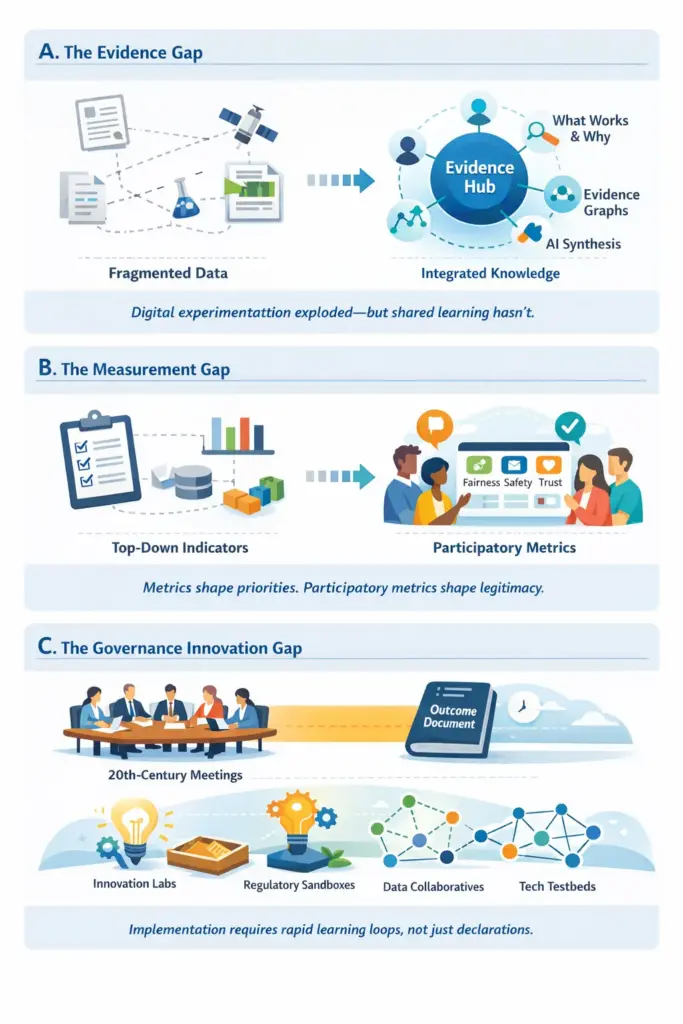
Yet twenty years after Geneva and Tunis, the WSIS process still relies on a governance and operational model conceived for another era. The world now operates in a datafied, AI-augmented environment defined by real-time systems, cross-border infrastructures, and unprecedented concentration of digital power. The question is not whether WSIS principles remain relevant—they do—but whether the mechanisms used to operationalize them are fit for purpose.
Below, we’ll outline the same core challenges and opportunities we identified a decade ago, but updated with the realities, tools, and governance needs of 2026…(More)”