
Blog by Tosin Gbadegesin, Namita Datta and Manjula K. Nettikumara: “Gender data has come a long way. We can now compare women’s labor force participation across countries, track legal reforms that affect women’s work, and see how many women sit on boards or work in certain firms. Yet the uncomfortable truth is this: we are measuring women in the system far better than we are measuring whether the system is working for women.
A recently published International Finance Corporation (IFC) report, Closing the Gap: A Private Sector Data Outlook on Women’s Economic Opportunities, highlights both the progress and the problem. The report maps where gender data exists and where it falls short. The bigger message, however, is not just that we need more data. It’s that we need better measurement, one that shifts from compliance to performance, from snapshots to trajectories, and from averages to lived realities.
The gender data paradox: more indicators, less clarity
The assessment identified 20 data sources that meet minimum thresholds for transparency, comparability, and relevance to private-sector decision making. These sources provide 429 indicators, covering an average of 129 countries over roughly 18 years. That sounds like abundance.
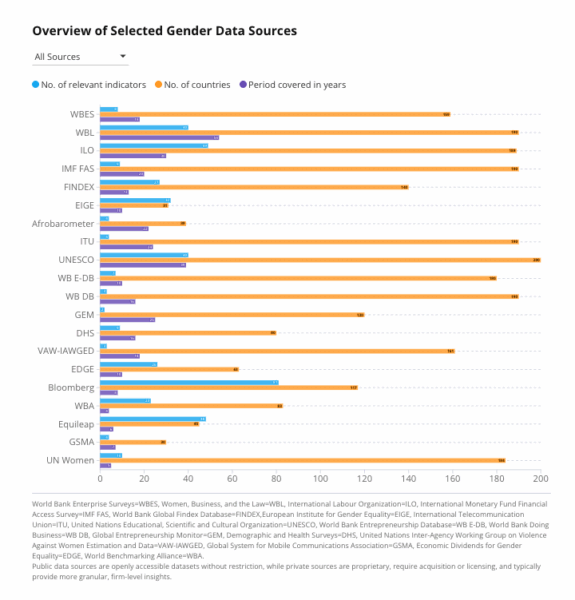
But here’s the paradox: as the number of indicators grows, actionable clarity does not always improve. Why? Because availability is not the same as adequacy. Many indicators tell us what exists (a policy, a disclosure, a headcount), but not what changes (women’s outcomes, mobility, safety, productivity, or constraints over time and the underlying social norms that shape these outcomes). And the areas that matter most for modern businesses, including supply chains, digital access, care systems, and gender-based violence affecting women’s ability to work, remain among the least measured…(More)”.
