
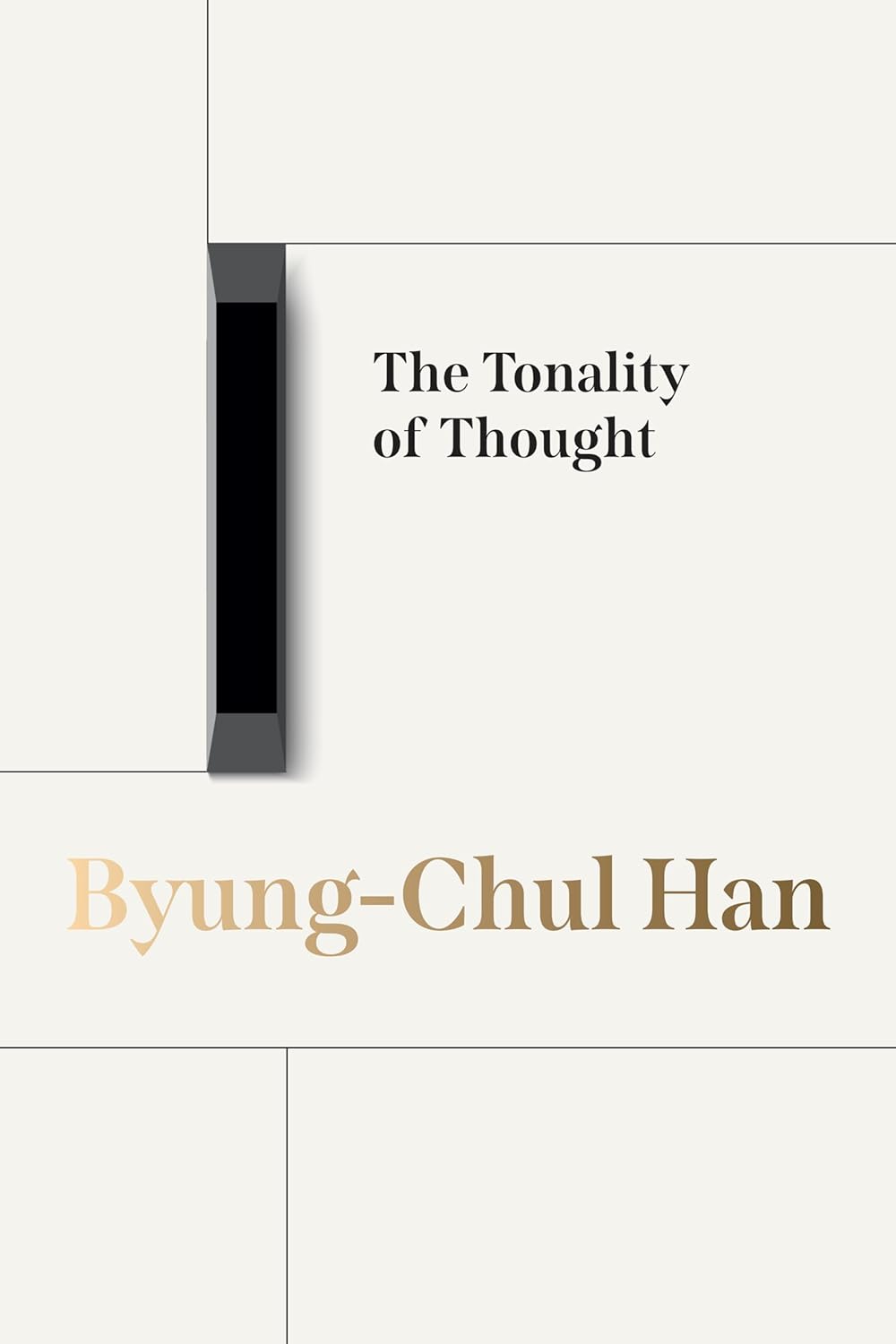
Review by Matt Elmore: “Byung-Chul Han is one of Europe’s most widely read philosophers. His audience in the United States has grown considerably over the last decade, though mostly outside the academy; in 2024, the New Yorker dubbed him “The Internet’s New Favorite Philosopher” — an ironic label for a thinker who keeps his distance from the online world. His latest book, The Tonality of Thought, gathers three public lectures that serve as windows into his work and way of life. In its own way, the book makes sense of why his writing has struck a chord in the digital age.
Han grew up in South Korea and now lives in Berlin. Most mornings, he begins his day not with his phone, not with email or headlines, but with Bach. A Steinway grand piano sits in his apartment, where he plays the aria from Bach’s Goldberg Variations — a spare, unhurried theme that opens and closes a set of thirty short pieces. He calls the piano his prayer wheel, like those found in temple courtyards across Asia. At the piano, he says, he does not so much think as let thinking take place. “For me, thinking is thanking.” When he plays, thoughts arrive like visitors, and he answers them with a quiet grazie.
A few steps from the piano stands an art nouveau writing desk. Every day he walks back and forth between the piano and his desk — twenty times, by his count — returning to Bach when he has no words. Han is a philosopher, though not the kind the last century prized. He builds no system, offers no program, stages no revolution. Nor does he stop at the unmasking of power. His books are unsparing in their critique of digital capitalism, but they do not end in critique; they rest on a deeper sense of beauty, friendship, and transcendence — themes as old as philosophy itself.
For more than two decades, Han has shaped a form of writing equal to his concerns: brief, concentrated books that think in movements rather than arguments. Their brevity feels deliberate, as if composed for the attention economy yet guided by another sense of time. Winding through subjects as varied as Zen, smartphones, and gardening, they often return to the same question: What has become of freedom in the digital age?..(More)”.
